LOUIS XVIII RARE COQUILLA NUT SNUFF BOTTLE
Louis XVIII, 1755-1824, was King of France from 1814 to 1824. He was the brother of King Louis XVI, who was executed in 1793 by guillotine during the French Revolution.
Louis XVIII reigned as king for slightly less than a decade. In 1814, he restored the monarchy, known as the Bourbon Restoration, to the French throne after the abdication of Napoleon. His government was a constitutional monarchy, the first parliamentary government since the French Revolution. As a constitutional monarch, Louis XVIII’s royal authority was limited by France’s Charter of 1814 (the Charter of the Restoration), which preserved basic civil liberties as well as social and economic gains of the Revolution.
Louis XVIII was the last king of France to die a reigning monarch.
The Snuff Bottle
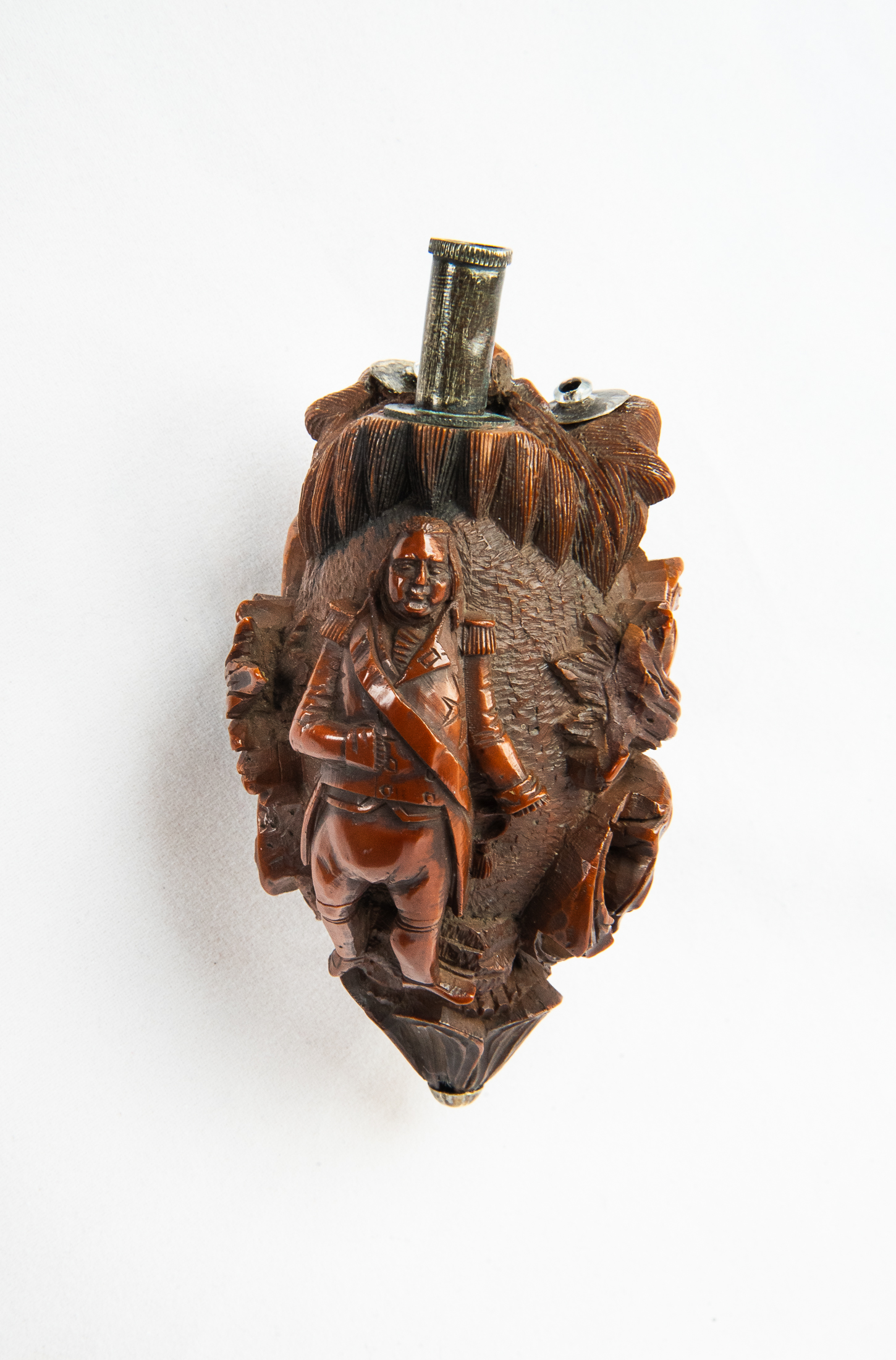
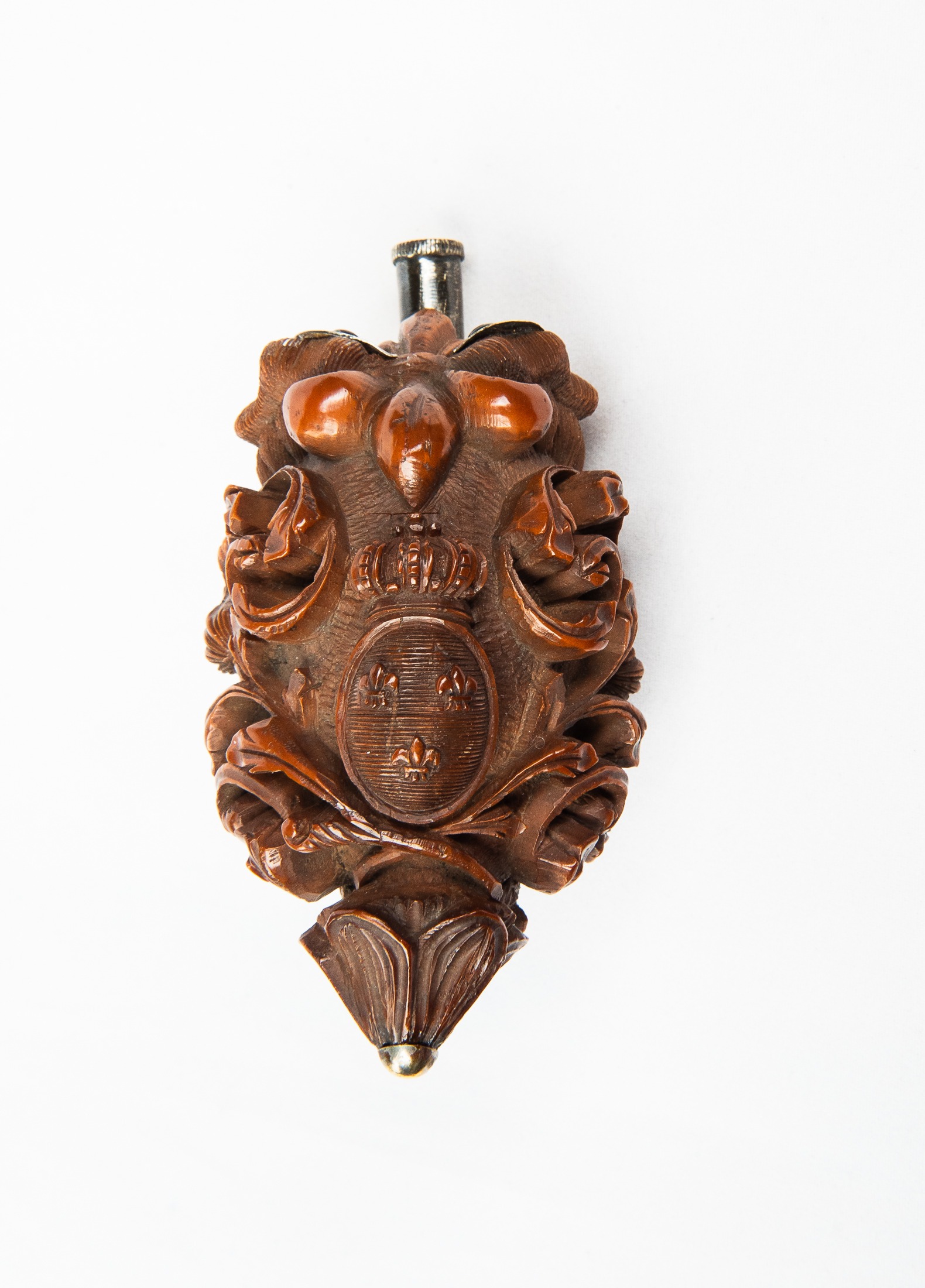
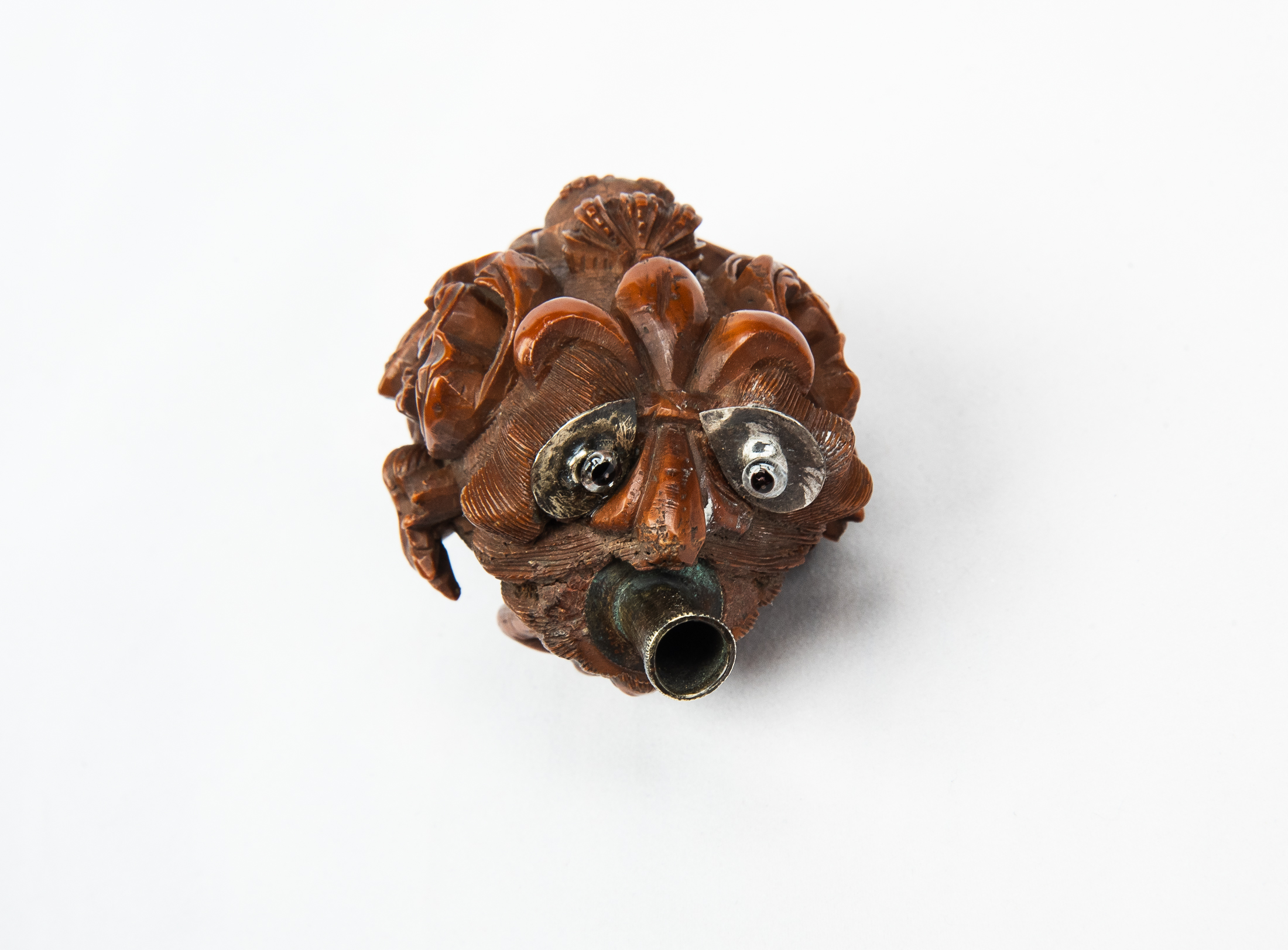
This extremely rare snuff bottle carved from a single coquilla nut features the figure of Louis XVIII in his military uniform on one side and a carved French coat of arms on the other side. The top of the bottle features a “bugbear” face, commonly defined by the three natural holes in the coquilla nut that resemble a face with a mouth and two eyes. The mouth serves as the bottle’s opening and is fitted with a metal stopper. The two protruding glass eyes are attached to a small metal plaquette.
Louis XVIII
The king is seldom represented in coquilla nut snuff objects. His full-length figure is carved prominently on one full side of the snuff bottle. He is depicted in military uniform from the early 19th century, wearing a coat with epaulets and a sash. His left arm is outstretched and his right arm is bent, placed against his body. The carved image on this snuff bottle bears a striking resemblance to painting of King Louis XVIII shown below. The snuff bottle image was likely modelled after this 1814 painting.
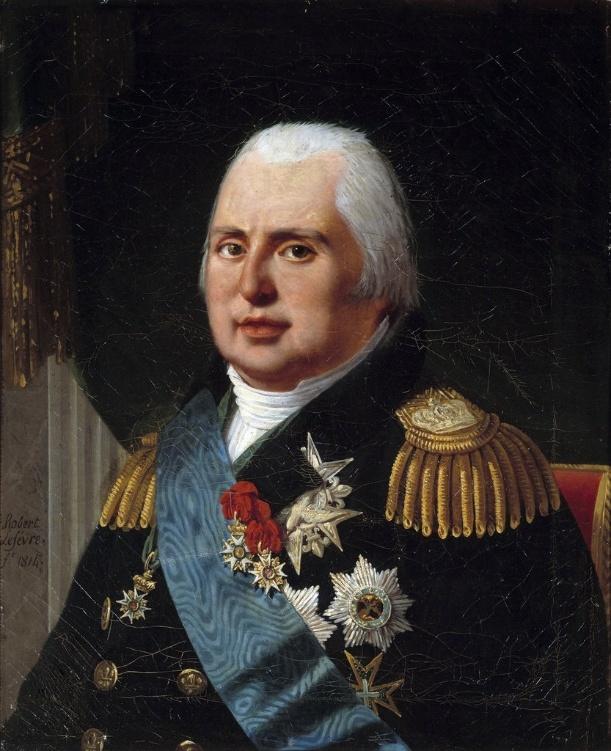
Painting by Robert Lefèvre
(1756–1830)
French Symbols
The side opposite the Louis XVIII carving represents symbols of the French monarchy. The focal point of the carvings on this side of the snuff bottle is an oval-shaped heraldic shield displaying three fleurs-de-lis symbols which represent the French monarchy. The fleurs-de-lis appear below a distinct crown. This image is framed by decorative swirling acanthus leaves, an ornamental motif resembling the Mediterranean Acanthus plant with a central vein and symmetrical leaves that terminate in curling scrolls. The upper section, the top of the bottle with the opening, depicts a face with two eyes and a mouth and incorporates a large fleur-de-lis set within the eyes and mouth. The lower section of the bottle tapers with symmetrical leaf-like motifs.
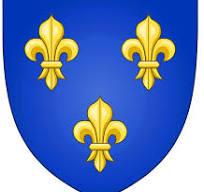
Before the French Revolution (which abolished heraldry in 1790), France had traditional coats of arms. The symbol of the three fleurs-de-lis (lilies) on the shield were associated with the French monarchy and symbolized purity, light, and the Holy Trinity. Napoleon Bonaparte abandoned the fleurs-de-lis and adopted a new imperial coat of arms featuring a golden eagle clutching a thunderbolt against a blue field, surrounded by a mantle decorated with golden bees. (See previous blog post displaying images of Napoleon.)
Revived during the Bourbon Restoration (1814–1830), the fleur-de-lis reappeared on royal seals, flags, and uniforms. It became a popular decorative motif for jewelry and architectural finials that blended French royal heritage with Catholic symbolism. Kings of the House of Bourbon used the golden fleurs-de-lis on a blue field to symbolize their sovereignty.
The snuff bottle’s regal depictions and historical significance suggest the object was commissioned for someone of high status or the royal court. It was likely commissioned and carved in France by a master craftsman in the first quarter of the 19th century.