The HMS Diamond Rock: A Coquilla Nut in the Form of a Naval Ship
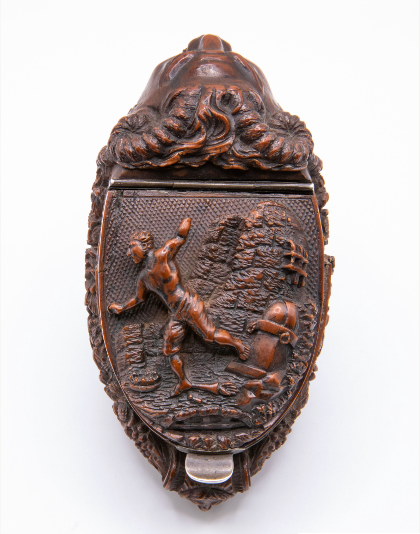
This intricately carved snuff box, made of two coquilla nuts joined together, is an accurate representation of the naval ship, HMS Diamond Rock, a 38-gun frigate that fought during the Napoleonic Wars in the Caribbean. Carved in the early nineteenth century, the snuff box measures 3.5 inches in length and was made from the solid ends of two nuts joined together in the center.
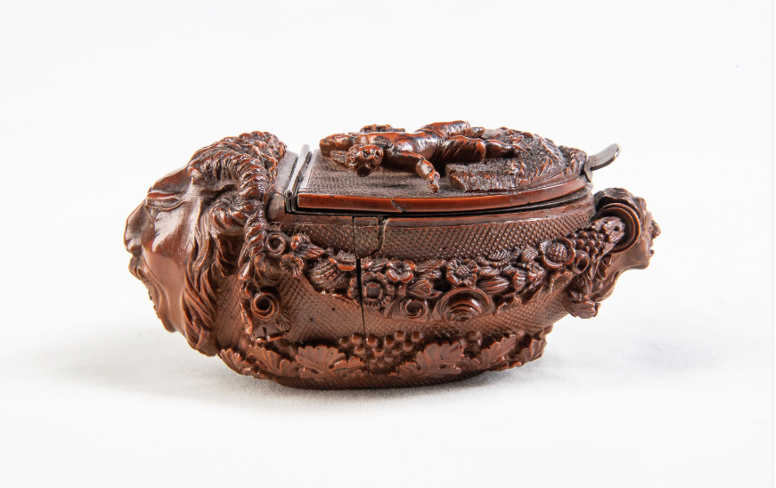
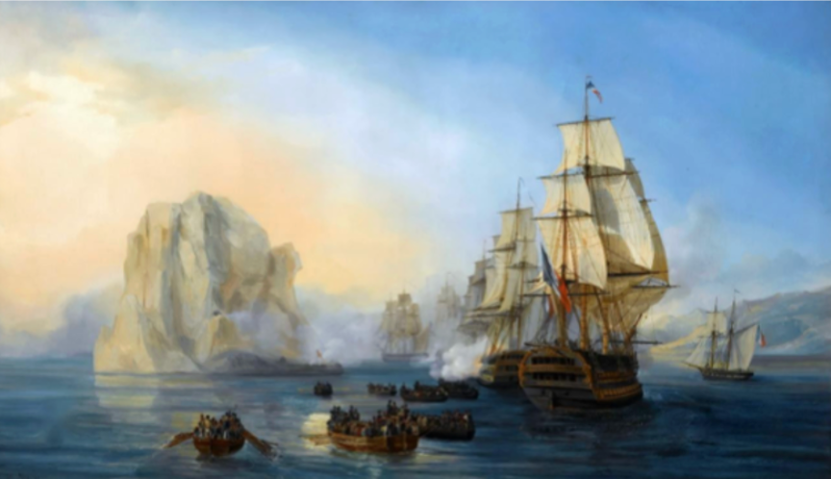
The carved lid of the HMS Diamond Rock snuff box accurately shows the geologic formation of Diamond Rock as depicted in a later painting of 1837 by Auguste Etienne Francois Mayer (1805-1890) entitled, Taking of the Rock Le Diamont, near Martinique, June 1805. The formation of Diamond Rock is clearly visible on the left-hand side of the painting, as well as the right-hand side of the box lid. The lid is attached to the box by a metal hinge.
The portrait on the lid appears to represent Lieutenant James Wilkes Maurice, commander of the ship Diamond Rock.
The snuff box was likely made in Martinique or onboard a naval ship that fought in the Caribbean. Many of the sailors in the British Royal Navy and Franch Navy were Black, forcibly transported to Brazil from West and West Central Africa and later sent to British or French colonies to labor in sugar plantations and other industries. Many of these captives or freed Blacks possessed fine carving skills as well as specific knowledge of the ships and battles in which they fought.
The Battle of Diamond Rock was fought in June, 1805, between the French and British navies. Located off the coast of Martinique, Diamond Rock’s location was of strategic importance for trade and military operations in the Caribbean. The British sought dominance in the region to ensure its maritime supremacy and limit French operations. Martinique was a French stronghold at the time. The British Royal Navy won the Battle of Diamond Rock, thereby gaining naval dominance in the Caribbean region.